Showing posts with label Team Management. Show all posts

Tuesday, January 18, 2011

Learning from Indonesia's National Football Team (Part 3)

New Perspective of Team Motivation


This will be the last part of my Indonesia’s Timnas note, hopefully a shorter one this time, since I tend to write a bit lengthy on the previous note, sorry for that :D


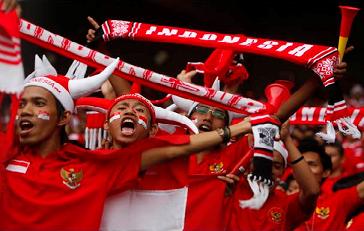
The second part of the final game is really a challenge for the Timnas, I can’t imagine the burden and the pressure rested on the Timnas for them to be able to beat the Malaysia and win the final still.  Hopes and prays from the fans supporting Timnas filling all the news in TV, newspaper, facebook, twitter, and all the possible media channel.


Among all that I’ve heard on the news, I noticed that the Timnas has also been mentioned, being promised a significant amount of rewards (I should’ve written money instead) if they are successful on the second game of final.

I could understand that money has always been a great motivator for all of us.  A lot of companies have a scheme for bonuses, rewards, sales incentives program, projects bonuses for their employees, but are there more to this?


More Factors to Motivation


As truth still there to the statements that money is a great motivator, there are still also another aspect of this.


Listening to Daniel Pink on the YouTube video, he argues that as long as the task involved used only mechanical skill, bonuses worked as expected; higher pay = better performance. 

But when it comes to a work requiring more complex cognitive skills, this is not the case; a larger reward might even lead to poorer performance.

There are three factors according to Pink, that lead to better performance and personal satisfaction.


Autonomy, the desire to be self directed.  Tradition notions management might not be aligned to this. But if engagement is required, then self directed is an aspect to be considered.

Mastery, is the urge to be better at something. Because it is fun and challenging to be able to be better at something.

Purpose, companies that are flourishing are animated by purpose. We like to be able to work at something that makes us a better person, and makes the world a little bit better as well.

Now, do you think that on the Timnas case, the three factors mentioned by Pink above is the true driving factor for the team? Or do you think that money can play it’s magic again as always ?


Reference:

Friday, January 14, 2011

Learning from Indonesia's National Football Team (Part 2)

Keeping the team focus – managing the stakeholder


As mentioned the first part of the note, Learning from Indonesia's National Football Team (Part 1), on the first game of final, it has been said that the Indonesia’s Timnas has faced lots of distraction during their practice session.


It has been said that there are lots of different parties that, probably due the success that the Timnas has achieved so far, wanted to take part in team success.  It has become a distraction in a way that it has shifted the focus of the team, that they are not seems to be able to fully concentrate on the preparation for the first final game.


The distraction, combined with a laser incident, and the fact that the Malaysian has also been playing very well, contributed to the only lost that the Timnas faced during the championship.  And the Timnas only lost, unfortunately, has become the one lost that prevented the Timnas from proudly claimed the champion title.


Keeping the Team Focus – Managing the Stakeholder

One way to help keep your team to focus is by managing the external factor or external influence towards the team.  This external factor/influence might be coming from people or group of people, which are affected by the deliverable of the team.

On the general terms, these external people or group of people that are affected by the deliverable of a team is called the team Stakeholder.

A stakeholder is any person or organization, who can be positively or negatively impacted by, or cause an impact on the actions of a company, government, or organization. Types of stakeholders are:
  • Primary stakeholders: are those ultimately affected, either positively or negatively by an organization's actions.
  • Secondary stakeholders: are the ‘intermediaries’, that is, persons or organizations who are indirectly affected by an organization's actions.
  • Key stakeholders : (who can also belong to the first two groups) have significant influence upon or importance within an organization
And as you and your team become more successful, the actions you and your team have taken will affect more and more people. The more people you affect, the more likely it is that your actions will impact people who have power and influence over your work. These people could be strong supporters of your work – or they could block it.

For the Timnas case, unfortunately, a stakeholder might have affected the blocking of Timnas from reaching the success of claiming the champion title.


Stakeholder Analysis

Stakeholder analysis is a term that refers to the action of analyzing the attitudes of stakeholders towards something (most frequently a project). It is frequently used during the preparation phase of a project to assess the attitudes of the stakeholders regarding the potential changes. Stakeholder analysis can be done once or on a regular basis to track changes in stakeholder attitudes over time.

Stakeholder analysis has the goal of developing cooperation between the stakeholder and the team and, ultimately, assuring successful outcomes for the activity. Stakeholder analysis is performed when there is a need to clarify the consequences of envisaged changes or at the start of new projects and in connection with organizational changes generally.

It is important to identify all stakeholders for the purpose of identifying their success criteria and turning these into quality goals

There are several steps in performing Stakeholder Analysis as the following.

Step 1. Identify Your Stakeholders

The first step in your stakeholder analysis is to identify who your stakeholders are. As part of this, think of all the people who are affected by your work, who have influence or power over it, or have an interest in its successful or unsuccessful conclusion.

Remember that although stakeholders may be both organizations and people, ultimately you must communicate with people. Make sure that you identify the correct individual stakeholders within a stakeholder organization.

Important thing to note also is that you need to perform this step regularly as required, as your stakeholder might changes along the course of your project due to i.e. organization changes.

Step 2. Prioritize Your Stakeholders

You may now have a long list of people and organizations that are affected by your work. Some of these may have the power either to block or advance. Some may be interested in what you are doing, others may not care.

Map out your stakeholders on a Power/Interest Grid on the template as shown in below, and classify them by their power over your work and by their interest in your work.


Someone's position on the grid shows you the actions you have to take with them:

·    High power, interested people: these are the people you must fully engage and make the greatest efforts to satisfy.
·    High power, less interested people: put enough work in with these people to keep them satisfied, but not so much that they become bored with your message.
·    Low power, interested people: keep these people adequately informed, and talk to them to ensure that no major issues are arising. These people can often be very helpful with the detail of your project.
·    Low power, less interested people: again, monitor these people, but do not bore them with excessive communication.

There are other type of matrix that you can work with to be able to map your stakeholder, other example as below is used by WWF in their activities.


Step 3. Understand Your Key Stakeholders

You now need to know more about your key stakeholders. You need to know how they are likely to feel about and react to your project. You also need to know how best to engage them in your project and how best to communicate with them.

You can summarize the understanding you have gained on the stakeholder map, so that you can easily see which stakeholders are expected to be blockers or critics, and which stakeholders are likely to be advocates and supporters or your project.

If you are now considering the Timnas stakeholder influence in the success and/or failure of the team, do you see that there are several stakeholders that can be better managed ?


Reference:
-       Stakeholder Analysis – Winning Support for your Projects, MindTools.com, http://www.mindtools.com/pages/article/newPPM_07.htm
-       Stakeholder Analysis, Wikipedia, http://en.wikipedia.org/wiki/Stakeholder_analysis
-       Stakeholder Analysis, World Wild Life foundation, http://assets.panda.org/downloads/1_1_stakeholder_analysis_11_01_05.pdf

Wednesday, January 12, 2011

Learning from Indonesia's National Football Team (Part 1)

Lessons in Team Development and Motivation

After a long waiting time, the football fans in Indonesian recently was given the thrilling moment to once again be able to enjoy the solid performance of the Indonesia's national football team (Timnas) in the Suzuki AFF championship.


Indonesia's Timnas has been showing brilliant performance and was undefeatable until they make it to the final, against Malaysia.

The final itself consists of two games. The first game was played at Bukit Jalil, in Kuala Lumpur, Malaysia.  And the second game was played at Gelora Senayan, in Jakarta, Indonesia.

The Indonesia's Timnas suffered their only lost during the championship in the first final game to the Malaysian team.  A rather tragic lost, since with the score 3-0 for the Malaysian victory, the Indonesia Timnas still can’t claimed the championship title although on the second final game, can turn the table around and beat the Malaysian team with 2-1.

There are several aspects during the journey of the Indonesia's Timnas in the championship that I would like to look at a bit further. As to me, this can be reflected a lot, to a journey that any project team might experience, in going through the phases in project life cycle.

The aspect that I have noticed first is, how the Timnas are build and the role of leader (in this case, the Timnas coach, Alfred Riedl) in building the team into a successful team.

The second aspect is how to maintain the teams focus towards the team’s goal

On the Indonesia's Timnas case, after a series of victories, there were a lot of distractions affecting the performance of the team. 

The Timnas coach, Riedl, also mentioned that one factor that might cause of the tragic lost in the first final game was the 'distraction' during the preparation of the team. 

The third aspect is how to maintain the motivation for the team.

The Timnas lost in the first game was surely a hard hit towards the team. Despite this fact, it is a must for the team to be able to rise up again, and be able to prepare well and aim still to win in the second game.

I will try to look at the first aspect – building a team into a successful team - on my current note, and will look at the other aspects on another note.


Building a Team into a Successful Team

The Forming – Storming – Norming – Performing model of group development was first proposed by Bruce Tuckman in 1965, who maintained that these phases are all necessary and inevitable in order for the team to grow to a successful team that deliver results. 


Tuckman later on added fifth stages, Adjourning, to include team break after project completion.


In the first stages of team building, the forming of the team takes place. The individual's behavior is driven by a desire to be accepted by the others, and avoid controversy or conflict.

Supervisors of the team tend to need to be Directive during this phase.

Every group will next enter the storming stage in which different ideas compete for consideration. The team addresses issues such as what problems they are really supposed to solve, how they will function independently and together and what leadership model they will accept. Team members open up to each other and confront each other's ideas and perspectives
.
Supervisors of the team during this phase may be more accessible, but tend to remain directive in their guidance of decision-making and professional behavior. This style often referred to as Selling.

In the next stage, norming, the team manages to have one goal and come to a mutual plan for the team at this stage. Some may have to give up their own ideas and agree with others in order to make the team function. In this stage, all team members take the responsibility and have the ambition to work for the success of the team's goals.

The supervisor of the team on this stage, need to use the Supporting leadership style.

It is possible for some teams to reach the performing stage. The team members are now competent, autonomous and able to handle the decision-making process without supervision. Dissent is expected and allowed as long as it is channeled through means acceptable to the team.

Supervisors of the team during this phase are almost always participative. This usually referred as Delegating style.

The last phase then, adjourning, happens when the team breaks up after a project completion.

Refer back to the Timnas, it seems to me that, the team is still at the forming stage.

Having the players recruited from the different club, although individually are a very high skilled player, it will still require time for the team member to grow and play together as a solid team.  Riedl as the leader in the team is also showing a directive style of leadership that is usually relevant in the forming stage.

Although, looking at the achievement that the new team has accomplished, in being able to make it to the final, I believe that a bright future is there, that the Timnas will rapidly move into the norming or even the performing stage.

So, to all the Indonesia's Timnas fans, let’s continue to support the Timnas, looking at the rapid development of the team in the AFF championship, I’m sure we will see Indonesia's Timnas celebrating a champion title very soon in upcoming football championship event!

Garuda didadaku …. Garuda Kebanggaanku …. Ku Yakin …. Hari ini …. Pasti Menang


Reference: